
Defensible Space &
Fire-Wise Landscaping
The work that does the most to keep a house standing, and the work we have been doing in this region for over 20 years.
Why This Comes First
Most homes burn from the ground up, not the front door in
Wind carries embers well ahead of a fire front, sometimes a mile or more. Those embers land in the places nobody looks: bark mulch against the siding, a juniper under a window, needles in a gutter, dry grass under a deck. A house with 30 feet of well-managed space around it and nothing burnable touching the walls is in a fundamentally different position than one without.
This is landscaping work. It uses the same crew, the same equipment and the same materials as the patios and boulder walls we have always built. The difference is where things go and what we choose to plant.
Zone 0 — The First Five Feet
Nothing burnable against the house
This narrow band matters more than anything else on the property, and it is the one most often ignored. The goal is simple: if an ember lands here, there should be nothing for it to catch.
- Bark mulch replaced with gravel, decomposed granite or stone
- Shrubs pulled back off the siding, especially junipers and arborvitae
- Nothing stored under decks or against foundations
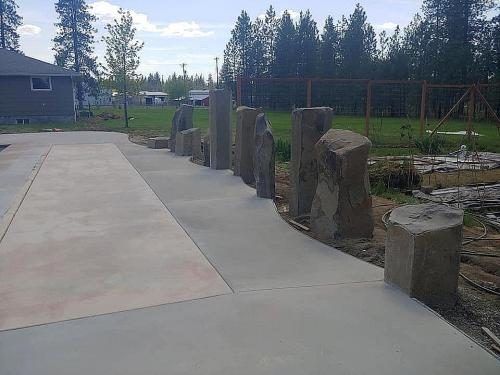
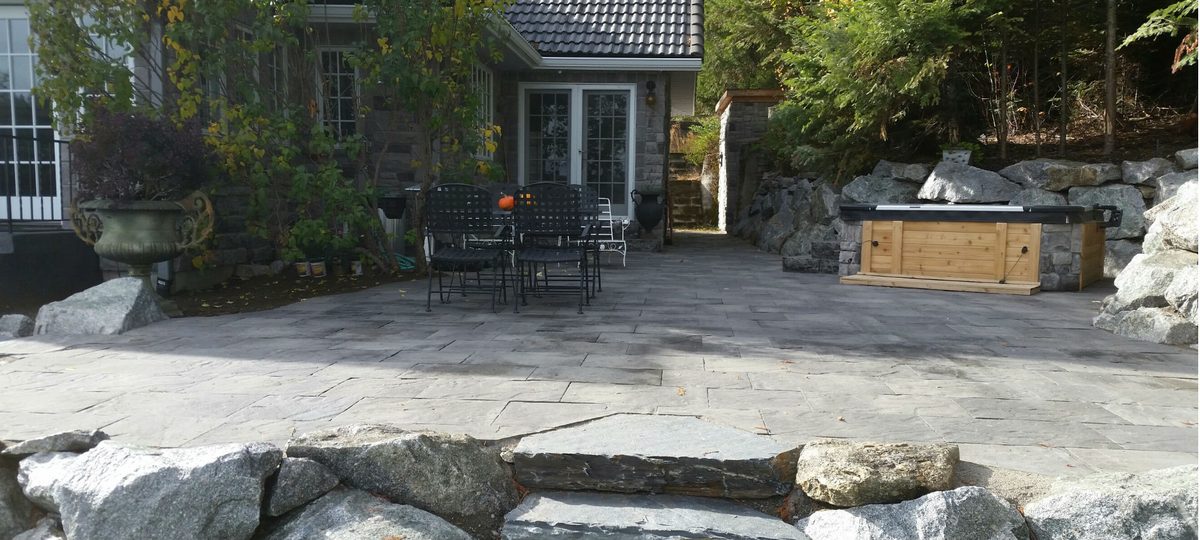
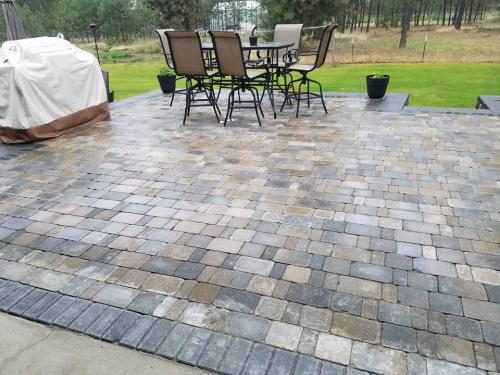
- Stone or paver aprons that look intentional, not defensive
Zone 1 — Five to Thirty Feet
Break up the path to the house
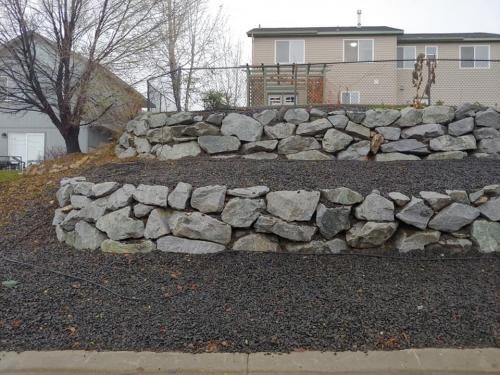
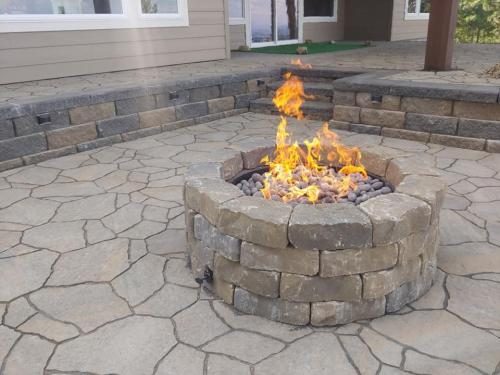
Fire travels through connected fuel. Break the connections and you slow it down or stop it. This is where hardscape earns its keep twice over, because a patio, a gravel path or a boulder wall is a fire break that you also happen to enjoy.
- Patios, walkways and gravel beds placed as intentional breaks
- Trees and shrubs spaced so canopies do not touch
- Ladder fuels removed, lower limbs raised off the ground
- Irrigated, well-kept planting close in; drier material further out
Zone 2 — Thirty Feet and Beyond
Thinning, grading and slope work
On the larger properties around Spokane this is where the bobcat and the mowing equipment come in. Fire moves faster uphill, so slope changes the math considerably, and a lot of homes out here sit on exactly the kind of grade that needs attention.
- Field mowing and brush reduction
- Thinning to break up continuous stands
- Extra clearance downslope, where fire accelerates
- Access and turnaround room for fire equipment
Plant Selection
It does not have to look like a gravel lot
The biggest objection we hear is that fire-wise means ugly. It does not. Plenty of plants that do well in the Inland Northwest hold moisture, stay low, and resist ignition. The trick is putting the right things in the right zone, and keeping the high-resin evergreens away from the structure.
- Low-growing, high-moisture species close to the house
- High-resin evergreens moved well away from structures
- Groupings broken up with stone, gravel or lawn
- Designed so it still looks like a yard, not a firebreak
Keeping It That Way
Defensible space is maintenance, not a one-time job
Spring Cleanup
Clearing winter fall, needles and dead material before things dry out.
Mid-Season Mowing
Keeping grass and brush down through the hottest, driest stretch.
Annual Thinning
Staying ahead of regrowth so the spacing you paid for holds.
Seasonal work is billed at our standard rate, $175.00 minimum at one-hour intervals. Call to talk through a maintenance schedule.
Start Here
Let's walk your property
We will give you an honest read on where the real weak points are and what order to tackle them in. Often the highest-value work is cheaper than people expect.